

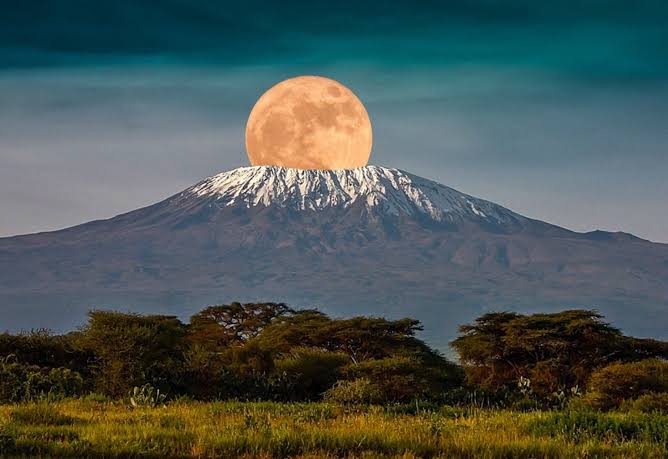
Mount Kilimanjaro
Stand Above Africa
Rising majestically above the plains of northern Tanzania, Mount Kilimanjaro is Africa's highest mountain and one of the world's most iconic trekking destinations. Its snow-capped summit, dramatic volcanic landscapes, and changing ecological zones attract adventurers from across the globe.
But climbing Kilimanjaro is about more than reaching the highest point. It is a journey through rainforest, moorland, alpine desert, and glacial landscapes—a gradual transformation of scenery, climate, and experience with every step.
At the summit, as the African landscape stretches far beyond the clouds, the journey becomes a memory that stays with you for a lifetime.
Climb Kilimanjaro. Discover What's Above the Clouds.
Begin your journey to the summit
Why Climb Mount Kilimanjaro?
The Roof of Africa
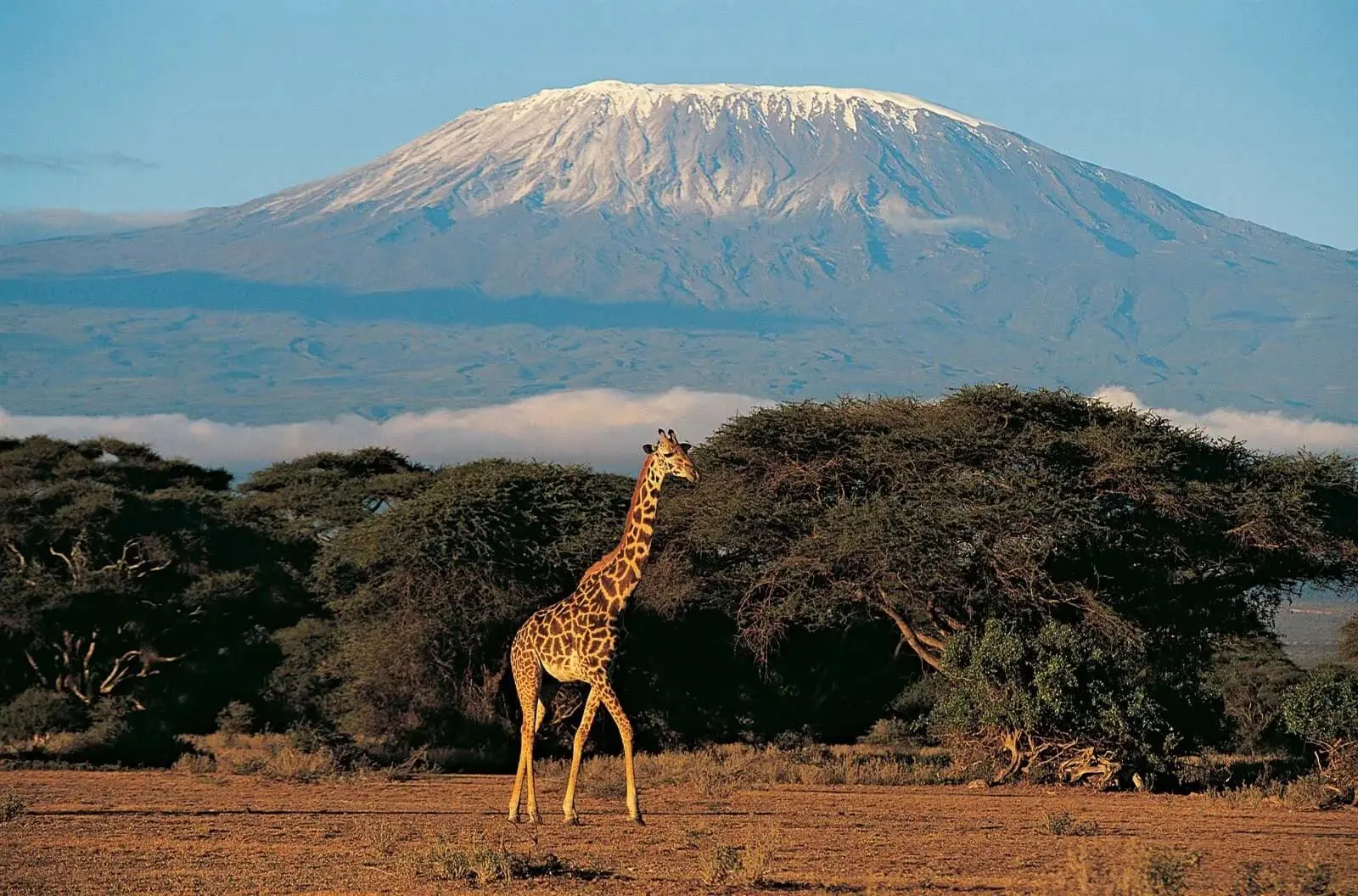
Mount Kilimanjaro rises to 5,895 metres (19,341 feet) above sea level, making it the highest mountain in Africa and the world's highest free-standing mountain. Its three volcanic cones—Kibo, Mawenzi, and Shira—form one of Tanzania's most recognizable landscapes.
Unlike many of the world's highest mountains, Kilimanjaro does not require technical mountaineering skills on its standard trekking routes. With appropriate preparation, acclimatization, professional guides, and a suitable route, trekkers can undertake this extraordinary journey as a non-technical high-altitude adventure.
Every route offers its own personality, scenery, and rhythm. The choice of route can therefore become an important part of your Kilimanjaro experience.
A journey through five worlds
The Kilimanjaro Experience
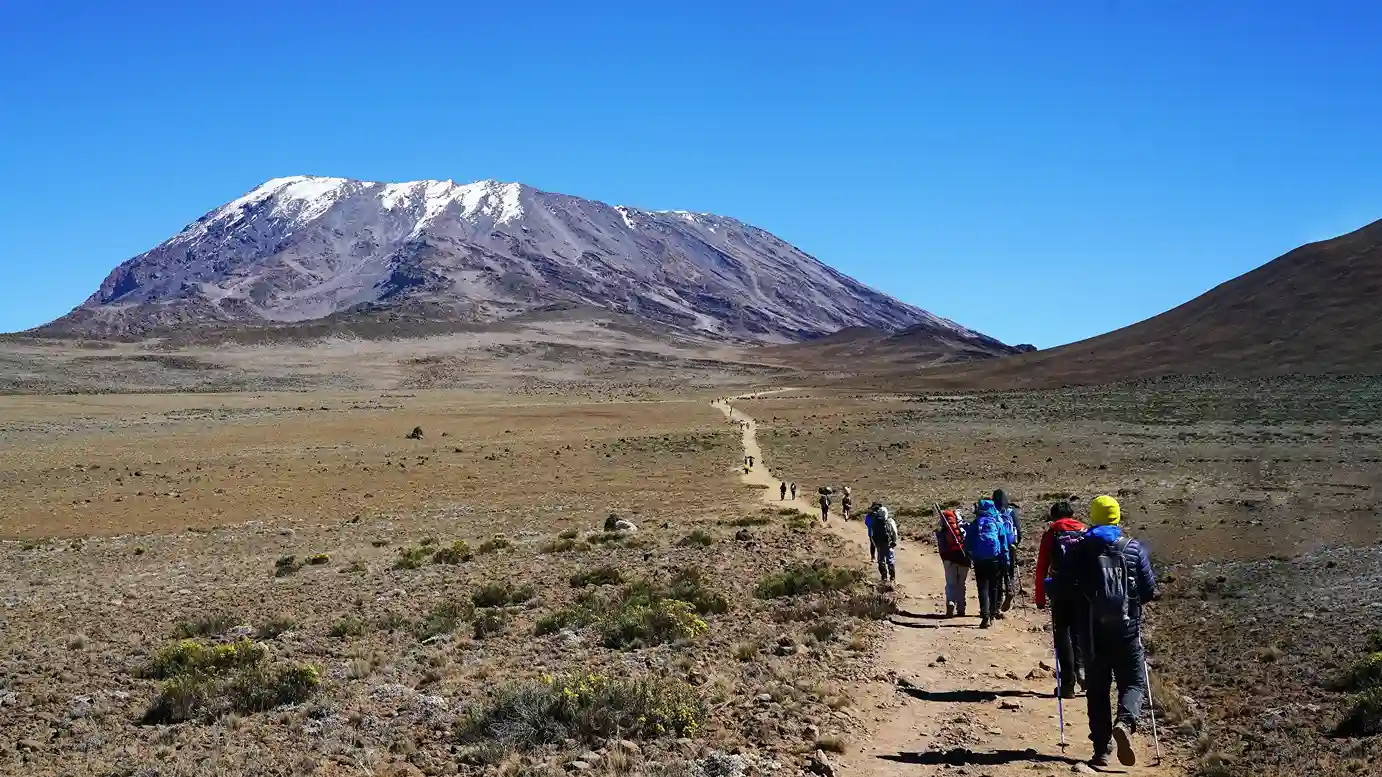
Climbing Kilimanjaro is like travelling through several different worlds in a single journey. Your trek begins in lush tropical rainforest, where tall trees, vines, moss, and birdlife surround the trail. As you gain altitude, the forest gradually gives way to open moorland, giant heathers, and volcanic landscapes.
Higher still, vegetation becomes increasingly sparse until you reach the alpine desert and finally the summit zone—a world of rock, ice, snow, and extraordinary silence.
This dramatic change in environment is one of the reasons Kilimanjaro is such a remarkable trekking destination.
From forest to the roof of Africa
The Five Ecological Zones
One of the defining features of Kilimanjaro is the remarkable transformation of the environment as you climb.
Cultivation Zone
The lower slopes are surrounded by agricultural communities and cultivated land, reflecting the relationship between local communities and the mountain.
Rainforest
The trail enters a lush tropical forest filled with towering trees, moss, ferns, and birdlife.
Moorland
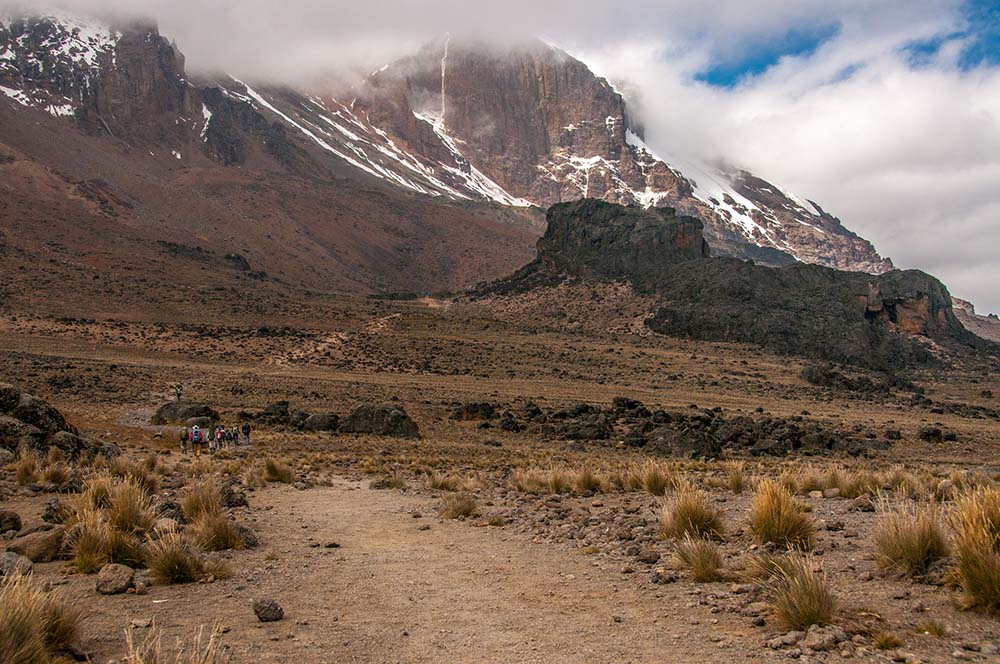
As the forest disappears, the landscape opens into moorland with giant heathers, grasses, and dramatic views.
Alpine Desert
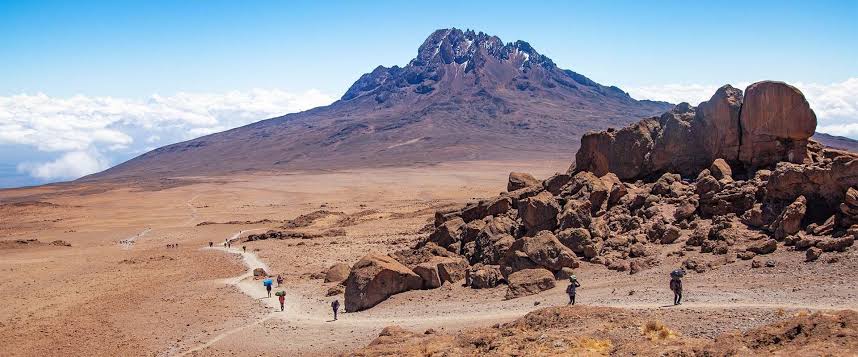
Vegetation becomes sparse as the environment grows colder and drier. Volcanic rock and open terrain dominate.
Arctic Zone
Near the summit, the environment becomes cold, rocky, and stark, with ice and snow around the upper reaches of Kibo.
Reach the roof of Africa
Uhuru Peak
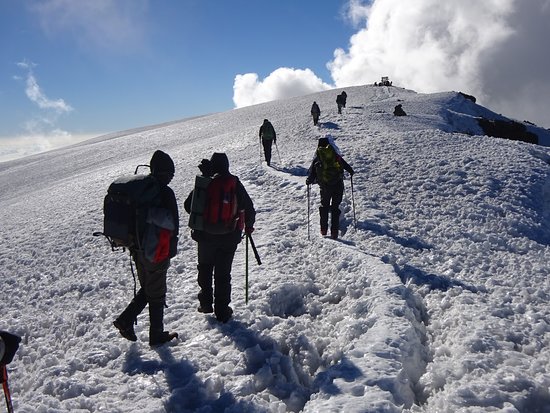
At 5,895 metres, Uhuru Peak is the highest point on Mount Kilimanjaro and the ultimate goal for most trekkers. Summit day begins before sunrise, as the trail rises through the high-altitude landscape and darkness slowly gives way to the first light of day.
Reaching the summit is not simply about standing at the highest point. It represents the culmination of days of preparation, walking, patience, determination, and teamwork. When the summit finally comes into view, the sense of achievement is difficult to describe.
Wildlife & Nature
Kilimanjaro is not simply a mountain of rock and snow. Its lower slopes support diverse ecosystems and wildlife, particularly within forested areas. Depending on the route and conditions, trekkers may encounter monkeys, birds, butterflies, and other forest species, including colobus monkeys and blue monkeys.
More than a summit
Unforgettable Experiences
Trek Through the Rainforest
Begin your adventure beneath a canopy of tropical vegetation, surrounded by the sounds and atmosphere of the mountain forest.
Camp Beneath the Stars
On camping routes, spend nights surrounded by the quiet wilderness of Kilimanjaro, with clear skies offering spectacular views of the stars.
Experience Changing Landscapes
Walk through dramatically different ecological zones as the mountain rises beneath your feet.
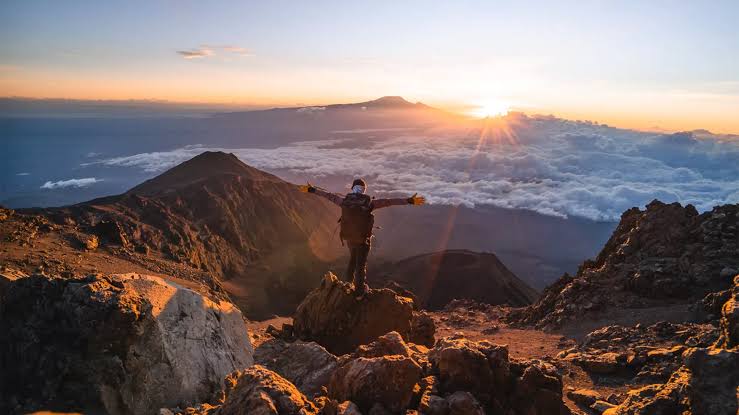
Sunrise at the Summit
Witness the first light of day from the upper slopes of Africa's highest mountain.
Explore Local Culture
Extend your Kilimanjaro adventure with experiences around the mountain and opportunities to discover the culture and communities of northern Tanzania.
Find your perfect season
When to Climb Kilimanjaro
Kilimanjaro can be climbed throughout much of the year, but weather conditions vary considerably by season.
January – March
Generally favourable trekking conditions, with colder temperatures at higher elevations and the possibility of clear views.
June – October
The drier months are among the most popular periods for trekking, offering generally favourable conditions and excellent mountain views.
November – December
Short rains can occur, but trekking remains possible. Conditions can be more variable, making preparation particularly important.
April – May
This period generally experiences the long rains, which can make trails wetter and conditions more challenging.
Route Selection
Choose an itinerary that matches your experience, schedule, and preferred trekking style.
Acclimatization
Allow sufficient time for your body to adjust to increasing altitude. Longer itineraries generally provide more opportunities for acclimatization.
Fitness & Preparation
Regular walking, hiking, and aerobic exercise can help prepare you for the physical demands of the trek.
Professional Guidance
An experienced mountain crew provides navigation, logistical support, meals, camp arrangements, and guidance throughout the journey.
Altitude Awareness
High altitude can affect anyone regardless of fitness. Trekkers should take symptoms seriously and follow qualified mountain professionals.
Humming Bees Voyage
Your Journey to the Roof of Africa Starts Here
Climbing Kilimanjaro requires careful planning, experienced mountain professionals, reliable logistics, and a team that understands safety, pacing, acclimatization, and personal support.
At Humming Bees Voyage, we focus on creating thoughtfully planned trekking experiences from your first enquiry to your final descent—from choosing your route and preparing for the mountain to reaching Uhuru Peak and celebrating your achievement.
The mountain is calling. Are you ready to answer? Plan Your Kilimanjaro Adventure →